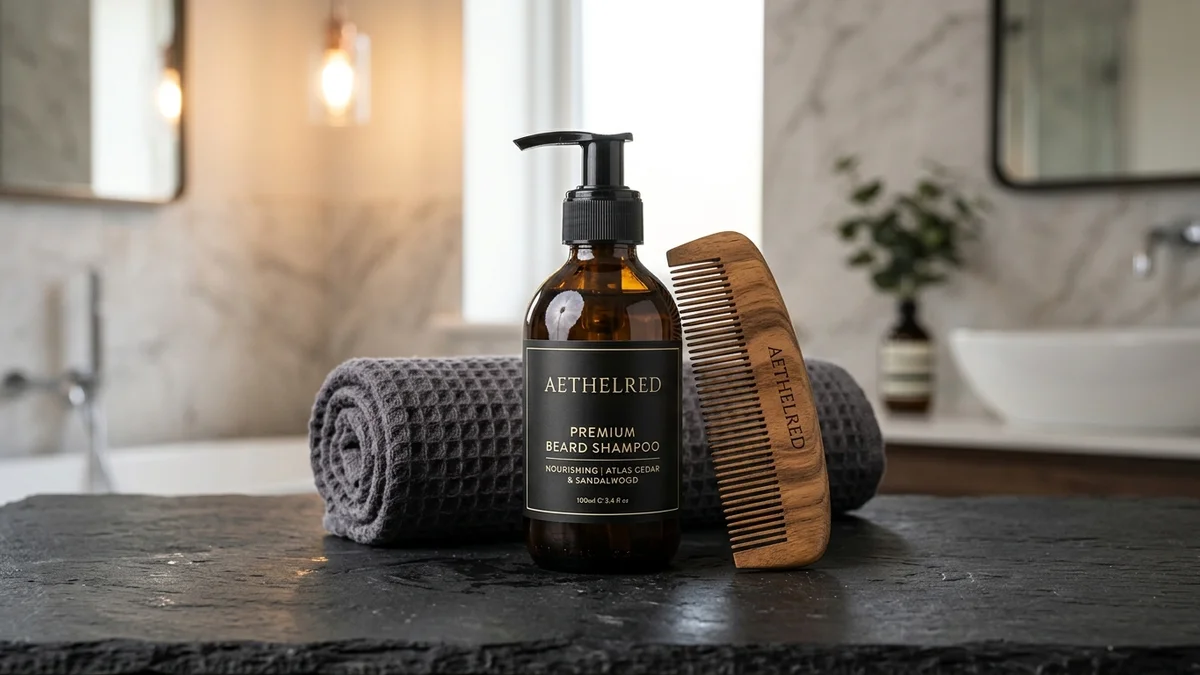
Beard Wash & Cleanser: Specific Formulation Guidelines and European Regulatory Requirements
Beard wash represents a booming segment in men's grooming, engineered specifically to cleanse coarse facial hair while safeguarding the delicate facial skin beneath. Unlike the scalp, facial skin possesses a distinct physiological profile, increased epidermal sensitivity, and proximity to sensitive mucous membranes. Formulating a premium beard wash requires mild surfactants, conditioning lipid agents, and precise pH calibration. To commercialize your beard wash in Europe, you must establish a fully compliant Product Information File (PIF / DIP) under Regulation (EC) No 1223/2009. Here is your definitive regulatory guide.
💡 Formulating a beard wash or men's facial cleansing treatment? Guarantee regulatory compliance for your male grooming range. Estimate your compliance budget in 2 minutes with our configurator.
Formulation Constraints Linked to Facial Physiology and Beard Hair
Facial hair washes undergo specialized toxicological scrutiny by our safety assessor during the Cosmetic Product Safety Report (CPSR):
- Facial skin tolerance: Facial skin is thinner and more vascularized than the scalp. Aggressive sulfated detergents (such as Sodium Lauryl Sulfate - SLS) must be avoided to prevent erythema, itchiness, and beard dandruff (sub-beard flaking). Formulators should prioritize extra-gentle surfactants (Coco Glucoside, Sodium Cocoyl Glutamate, Cocamidopropyl Betaine).
- Physiological pH balance: While healthy facial skin maintains an acidic mantle around pH 5.5, beard keratin fiber benefits from mild conditioning. A compliant beard wash is balanced between pH 5.5 and 6.5 to cleanse effectively without stripping facial lipids or causing hair brittleness.
- Enriched conditioning actives: Hydrolyzed wheat or oat proteins to smooth the hair cuticle, vegetable glycerin for hydration, and cold-pressed castor seed oil (INCI: Ricinus Communis Seed Oil) or argan oil to nourish facial hair.
The beard wash PIF gathers all raw material specifications, formulation data, and safety dossiers. To understand regulatory criteria for men's grooming, consult our dedicated guide on the hair care PIF and our cornerstone guide on the cosmetic PIF.
🔬 Insights from our Cosmetic Safety Assessor
"Because beard washes are applied directly to the face, accidental contact with the ocular mucosa and lips during rinsing is very common. To validate the safety assessment, the toxicologist requires documented ocular tolerance data (in vitro HET-CAM or BCOP). Furthermore, popular masculine fragrance oils (sandalwood, cedarwood, citrus) must be carefully controlled: fragrance allergens such as limonene, linalool, and eugenol must not exceed strict skin sensitization thresholds, especially given regular close-shave irritation."
Mandatory PIF Structure for Commercial Beard Washes
To market a beard cleansing line legally across Europe, your regulatory documentation must include:
- 100% Quantitative and qualitative INCI formulation details.
- Cosmetic Product Safety Report (CPSR Parts A and B) signed by our certified safety assessor.
- Good Manufacturing Practice (ISO 22716 GMP) declaration from your production facility or contract manufacturer.
- Accelerated physicochemical stability test report and ISO 11930 challenge test report (mandatory for aqueous formulas).
- Official CPNP electronic notification receipt.
Our specialists guide you through each stage of this compliance process. Discover our transparent packages in our PIF services guide.
⚠️ 3 Frequent Regulatory Deficiencies in Beard Wash Products
- Formulating with harsh sulfate surfactants: Utilizing SLS or high SLES concentrations strips facial sebum and provokes intense sub-beard itching and skin peeling.
- Exceeding fragrance allergen limits: Woody, spicy, and citrus fragrance oils contain high concentrations of regulated allergens that must be calculated and listed on the product label.
- Unsubstantiated beard growth claims: Claiming that a beard wash "accelerates beard growth" or "fills in patchy beards" without clinical trial substantiation is strictly prohibited under Regulation (EU) No 655/2013.

Semantic Regulatory Architecture Across Your Men's Grooming Range
If you also develop complementary beard balms, oils, or alternative cleansers, explore our related technical guides:
- For conventional liquid hair shampoos, read our guide on liquid shampoo regulation.
- For natural handcrafted cleansers, consult our guide on homemade shampoo PIF.
- For artisan DIY recipes, check our guide on natural shampoo formulation and PIF.
Frequently Asked Questions About Beard Wash Regulation
- Is packaging compatibility testing required for beard wash pump dispensers?
- Yes. Beard washes are commonly packaged in dark amber PET bottles fitted with lotion pumps. During the accelerated stability trial (8 to 12 weeks at 40°C), testing laboratories verify that formula essential oils do not soften the plastic container or corrode internal dispensing pump springs.
- Can consumers simply use regular hair shampoo on their beard?
- While physically possible, conventional hair shampoos are designed for scalp skin, which has higher sebum production and greater epidermal thickness than facial skin. Regular shampoos frequently cause tightness, flaking, and skin irritation when used on facial hair, which justifies creating a dedicated, milder beard wash formula.
- How do you substantiate a "softens the beard" claim?
- The claim "softens beard hair" is substantiated by the inclusion of proven conditioning ingredients (such as cationic conditioning agents, vegetable oils, or inulin). It does not require complex clinical trials; documented consumer usage testing or ingredient technical dossiers compiled within Part 4 of the PIF provide sufficient scientific justification.
Configure Your Cosmetic PIF Project Live
Calculate your EU Cosmetic PIF & CPSR Price
Select your profile, galenic formula type, and laboratory test status to get an instant, transparent regulatory estimate.