Body Scrub: Exfoliating Formulation Guide, Particle Selection, and EU Regulatory Compliance
Body scrubs are an essential personal care category designed to exfoliate the epidermis, smooth rough skin, and accelerate cellular turnover across the body. Formulated as exfoliating gels, rich creams, or anhydrous polishing oils, these products feature physical abrasive particles or chemical keratolytic agents. Applied over broad skin surfaces under the shower, they undergo rigorous safety evaluations in Europe. To market them legally, you must compile a Product Information File (PIF) compliant with Regulation (EC) No 1223/2009. Here is our complete guide.
💡 Formulating a body scrub or exfoliating polish? Ensure the regulatory compliance of your formulas. Estimate your costs in 2 minutes with our configurator.
Formulation Constraints for Body Scrubs and Polishes
Body exfoliating products incorporate physical or chemical peeling agents whose safety profile is evaluated by our Cosmetic Safety Assessor during the Cosmetic Product Safety Report (CPSR):
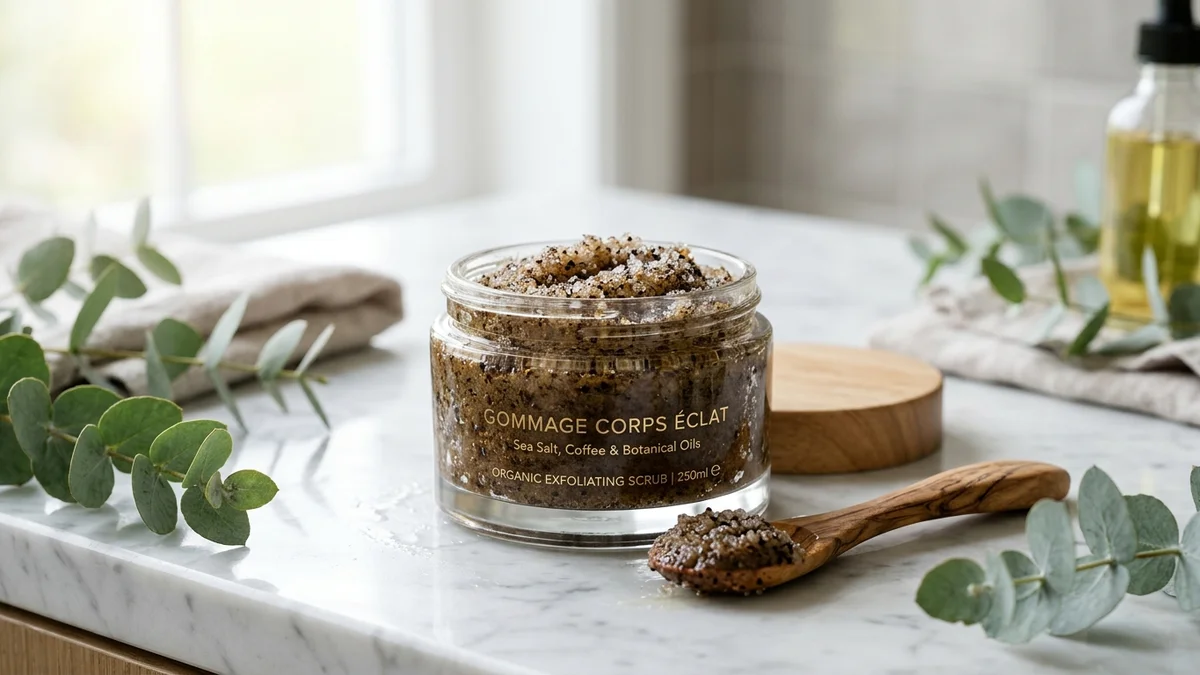
- Physical Abrasive Grains: Cane sugar (INCI: Sucrose), sea salt (INCI: Maris Sal), crushed olive stones, ground apricot seeds, coffee grounds, or silica beads. The Safety Assessor verifies grain hardness and particle size for body skin without causing irritation. Synthetic plastic microbeads (polyethylene) are strictly prohibited across Europe under Commission Regulation (EU) 2023/2055.
- Carrier Botanical Oils: Macadamia seed oil, sesame oil, or sweet almond oil to nourish the skin and prevent barrier dehydration during mechanical exfoliation.
- Surfactants and Gelling Systems: Gentle foaming surfactants and polymers to create foaming shower scrubs that rinse away cleanly.
The body scrub PIF compiles this formulation, analytical purity, and safety data. For baseline requirements on body formulations, consult our guide on the body care & hygiene PIF and our central overview on the cosmetic PIF.
🔬 Insights from our Cosmetic Safety Assessor
"Body scrubs containing water and applied under the shower must pass a microbiological challenge test under ISO 11930. Because these products are kept in damp shower stalls and sampled directly with wet hands, the risk of microbial proliferation (especially Pseudomonas species) is acute. For waterless anhydrous formulas (oil-and-sugar/salt scrubs), challenge testing is not required under ISO 29621, provided an antioxidant like tocopherol (0.2%) is added to prevent oil rancidity."
Regulatory Steps to Ensure Compliance for Body Scrubs
To market your body scrub legally in France or across the EU, execute the following steps:
- Thermal Stability and Packaging Compatibility: Accelerated thermal testing at 40°C over 8 to 12 weeks to confirm grains do not settle irreversibly and emulsions do not break.
- Microbiological Challenge Testing: A 28-day laboratory preservative efficacy test (mandatory for water-containing formulations).
- Cosmetic Product Safety Report (CPSR): Toxicological assessment and formal sign-off by our qualified Safety Assessor under Article 10(2), with close review of fragrance and essential oil allergens.
- CPNP Registration: Mandatory notification of every finished cosmetic shade on the European Cosmetic Products Notification Portal prior to distribution.
Our team delivers complete regulatory compliance packages. Find out more about our packages and transparent pricing on our PIF services page.
⚠️ 3 Frequent Compliance Pitfalls in Body Scrubs
- Using Banned Plastic Microbeads: Forbidden across Europe under Commission Regulation (EU) 2023/2055. Formulate strictly with natural, biodegradable abrasives (sugar, salt, silica, bamboo).
- Irreversible Particle Sedimentation: If exfoliating grains compact into a hard layer at 40°C in an accelerated stability chamber, the formula fails stability criteria for the PIF.
- Omitting PAO or Expiry Dating: Jars of body scrubs deteriorate quickly once opened due to shower water ingress. Accelerated stability testing must substantiate the Period After Opening (e.g., 6M) printed on packaging.
Regulatory Cross-Linking Across Product Categories
If your brand also formulates adjacent body or extremity care products, consult our related guides:
- For delicate hand exfoliation, see our guide on hand scrub regulation.
- For specialized foot treatments, visit our guide on foot cream regulation.
- For intensive foot exfoliation, review our guide on foot scrub regulation.
Frequently Asked Questions on Body Scrub Regulations
- Is container compatibility testing required for PP body scrub jars?
- Yes. Body scrubs are frequently packaged in wide-mouth polypropylene (PP) or PET jars. Accelerated stability testing (8 to 12 weeks at 40°C) verifies that the formula lipids do not stress-crack the container and that closure liners maintain an airtight seal against moisture evaporation.
- Can sea salt be used as an exfoliant in certified organic body scrubs?
- Yes, absolutely. Sea salt (INCI: Maris Sal) is an authorized natural mineral abrasive under Cosmos standards. When combined with organic vegetable oils in an anhydrous formula without free water, it yields an effective scrub exempt from challenge testing.
- How do you substantiate a "softens skin" claim for a body scrub?
- The claim "softens skin" or "smoothing effect" is an aesthetic, qualitative claim. It does not require complex clinical trials: a documented consumer panel evaluation during product development provides adequate substantiation for Part B of the PIF.
Configure Your Cosmetic PIF Project Live
Calculate your EU Cosmetic PIF & CPSR Price
Select your profile, galenic formula type, and laboratory test status to get an instant, transparent regulatory estimate.